

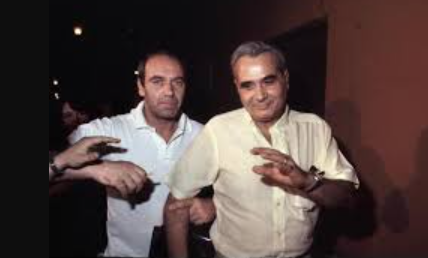
Mario Meneguzzi was born on 20 March 1933 in Castellammare di Stabia, a town in southern Italy. He died in 2009. Before public scrutiny, he lived a relatively quiet life as a bar manager in Rome and was known among acquaintances for steady work and family commitments. He was married to Lucia Orlandi and was uncle by marriage to Emanuela Orlandi.
His name later resurfaced in public discourse due to renewed interest in the disappearance of Emanuela — a case that has drawn repeated investigation, media coverage, and controversy.
| Mario Meneguzzi – Profile Summary | |
|---|---|
| Full Name | Mario Meneguzzi |
| Date of Birth | 20 March 1933 |
| Age | Deceased (Died in 2009) |
| Birthplace | Castellammare di Stabia, Italy |
| Nationality | Italian |
| Religion | Christianity (as commonly associated with his region) |
| Ethnicity | Italian |
| Occupation | Bar Manager (Hospitality) |
| Years Active | 1950s–2000s (Hospitality Work) |
| Marital Status | Married |
| Spouse | Lucia Orlandi |
| Children | Not publicly documented |
| Parents | Not publicly documented |
| Height | Not publicly available |
| Weight | Not publicly available |
| Known For | Being part of the extended Orlandi family; mentioned in later stages of the Emanuela Orlandi case |
| Net Worth | Not publicly disclosed |
| Controversies | Referenced in renewed investigative interest related to the 1983 disappearance of Emanuela Orlandi |
| Social Media | None (lived pre-social media era) |
Early Life & Work
Meneguzzi spent his early years in southern Italy. Later, he moved to Rome where he found steady employment in the hospitality sector. Over decades, he managed a bar linked to a major governmental institution and maintained a modest lifestyle. People who knew him described him as hardworking, discreet, and dutiful — qualities typical of someone who avoided public attention and sought a low-profile life.
He built a family with Lucia Orlandi, marrying into a household that would later attract intense media focus. Despite his proximity to a high-profile family, for many years Meneguzzi remained largely outside the public spotlight.
Family Connection & The Orlandi Disappearance
On 22 June 1983, Emanuela Orlandi — daughter of an employee of the Vatican — vanished under mysterious circumstances. The disappearance triggered one of Italy’s longest and most debated investigations, sending ripples through media, state institutions, and public consciousness.
As Emanuela’s uncle by marriage, Mario Meneguzzi played an early role as the family representative during the initial searches and public appeals. At that time, he helped coordinate with authorities and the press, attempting to draw attention to the disappearance and support the family’s search efforts.
Because of this family tie, his name was inevitably recorded in police reports, media files, and public recollections. For decades, however, he remained a peripheral figure in public narratives, known more for his family association than for active involvement in any official allegation or criminal charge.
Renewed Interest and Allegations
In recent years, previously sealed or little-known documents and private communications have come back into public discussion. Some of these include references to concerns about internal family dynamics and alleged behaviors involving members of the Orlandi household. Among the individuals mentioned in such documents is Mario Meneguzzi, due to his familial connection.
Media reports and investigative inquiries noted that some correspondences once exchanged among religious-institution personnel contained mentions of unease about certain relationships within the family of Emanuela. These mentions, paired with gaps in early police archives and contradictory testimonies over the years, rekindled interest in reviewing all potential leads — including persons who, until then, were considered only peripherally.
As a result, in one of the renewed investigative phases authorities searched property connected to Meneguzzi, examining whether archived records or documents might shed new light on unresolved aspects of the 1983 case. This step marked the first time in decades that investigators explicitly identified his name as part of a probe — though they clarified that being under examination does not equate to a criminal charge.
Public Reactions and Family Statements
The resurfacing of Meneguzzi’s name stirred a strong reaction from his surviving family. They issued statements defending his reputation, describing him as a humble, honest man who lived a quiet life, devoted to work and family. They rejected as “painful and false” any insinuations suggesting wrongdoing.
At the same time, some public voices — journalists, legal observers, survivors’ advocates — argued that revisiting overlooked leads might help finally bring clarity to a case that has spanned generations. The dual narrative — between family defense and institutional duty to investigate — has become a recurring tension each time the Orlandi case reemerges.
What Is Confirmed — What Is Unclear
Confirmed Facts
-
Mario Meneguzzi existed; his birth date and death year are part of public records.
-
He worked in hospitality in Rome and was married into the Orlandi family.
-
He was publicly involved in early efforts to seek help and visibility when Emanuela vanished.
-
His name was included in recent investigative paperwork; at least one search of property associated with him occurred under judicial order.
What Remains Unclear
-
No public record shows a formal charge or criminal accusation against Meneguzzi.
-
There is no publicly verified proof linking him to the disappearance of Emanuela Orlandi.
-
Allegations tied to his name come from decades-old documents, private correspondence, and unconfirmed testimonies — none rise to the level of judicial conviction.
Because of these uncertainties, any definitive claims about his responsibility remain unproven. Investigators themselves emphasize that his name represents a lead among many, not a concluded accusation.
Legacy and Why He Still Matters
Even if not proven guilty or formally accused, Mario Meneguzzi’s name remains part of the broader narrative around one of Italy’s most puzzling unresolved cases. His inclusion in archival materials — when few remain alive — demonstrates how gaps in early investigation, lost documents, and public fatigue can preserve uncertainty for decades.
For researchers, family members, and the public, his story is a cautionary example of why thorough documentation, transparent inquiry, and long-term preservation of evidence matter. Regardless of eventual findings, the fact that his name resurfaces after decades underscores the complexity of truth-seeking in unresolved disappearances.
Frequently Asked Questions
Q: Who was Mario Meneguzzi?
A: An Italian bar manager born in 1933, uncle by marriage to Emanuela Orlandi, remembered for his steady private life and later public attention due to renewed investigation interest.
Q: Was he ever charged with a crime?
A: Public records show no formal charge or conviction. Investigative attention indicates only that he was considered a potential lead in one of the case’s later phases.
Q: Why did his name resurface decades after the disappearance?
A: Because of documents, private correspondence, and renewed searches that prompted authorities to re-examine many leads — including members of the wider family circle.
Q: Does his death prevent thorough investigation?
A: Yes and no. His passing means he cannot be questioned or produce new testimony — but archived documents, testimonies, and material evidence remain and may still yield new insights.
Q: What’s the status of the case now?
A: The disappearance of Emanuela Orlandi remains officially unresolved. Many leads have been pursued and closed; renewed investigations continue intermittently when new evidence or leads emerge.
Conclusion
Mario Meneguzzi lived most of his life quietly and out of the spotlight. His mundane work, family life, and personal reputation contrasted sharply with the public turbulence surrounding the disappearance of a relative decades later. While renewed investigations cast light on his name, the evidence remains ambiguous.
His story represents both the fragility of memory and documentation over time and the ethical challenge of balancing suspicion with proof. Until conclusive findings arise, he remains one of many peripheral figures in a case that continues to puzzle Italy and the world.